




QUESTION 1
What’s one mistake food manufacturers make about sustainability?
They treat it as a corporate mandate rather than a cultural shift. Sustainability strategies get written at the executive level and handed down — but the people closest to the packaging decisions are plant managers, procurement leads, and line operators. When they’re not part of the conversation, the best-designed policy stalls at implementation. Real progress happens when sustainability becomes everyone’s lens, not just the ESG team’s KPI.
How Duropac can help you?
Before your next meeting with Duropac or any packaging redesign, bring your plant-level contacts, your procurement team, and your operations leads into the same room. Ask them: where do you see waste, inefficiency, or materials that just don’t feel right? You’ll be surprised what surfaces. The people running the lines every day often already know where the problems are — they just haven’t been invited into the sustainability conversation yet.
The role of a sustainability advisor isn’t just to bring solutions in from the outside; it’s to activate the knowledge that already exists inside your organization.

QUESTION 2
What's the easiest sustainability win companies overlook?
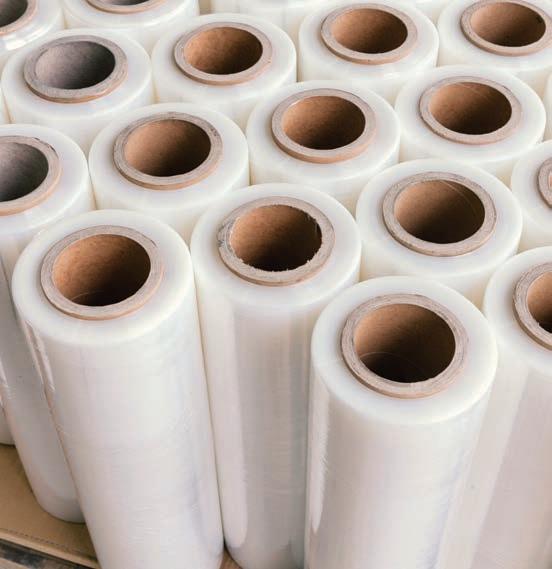
Downgauging. Simply reducing film thickness, while maintaining functional performance. This cuts resin use, lowers carbon intensity per unit, reduces transport weight, and doesn’t require any infrastructure change. It’s invisible to the consumer and immediate in impact.
How Duropac can help you?
Pull your top three film SKUs and ask Duropac: what’s the minimum gauge this structure can run at without compromising seal integrity or barrier performance?
In most cases there’s 10–15% resin reduction sitting on the table unclaimed. That’s a sustainability win that also reduces material cost.
QUESTION 3
Where should a company start if it wants to be more sustainable?
Start with a packaging audit mapped against the Golden Design Rules. You can’t improve what you haven’t characterized. Know what polymers you’re running, what layers are incompatible with recyclability, and where you land against the GDR priority hierarchy.
Eliminate, reduce, reuse, recycle — in that order.
How Duropac can help you?
Book a packaging structure review with Duropac and ask us to map every SKU against the GDR checklist. It’s a half-day exercise that creates a prioritized roadmap.
Most companies discover that 60–70% of their volume is already close to compliance, and the path forward is far clearer than they assumed. That’s a motivating starting point, not an overwhelming one.
QUESTION 4
What's a common myth about sustainable packaging?
That recyclable and recycled mean the same thing. A package can be technically recyclable by design and still end up in landfill because it’s the wrong size for optical sorters, carries a label that contaminates the stream, or simply isn’t collected in the region where it’s sold. Recyclability is a system outcome, not a material property.
How Duropac can help you?
If your package says “please recycle” but hasn’t been validated against APR Design Guidelines or the accepted materials framework in the provinces where you sell, you may be making a claim you can’t defend. Duropac can walk you through the verification behind any recyclability claim we make.


QUESTION 5
What's one small change that can make a big impact in packaging?
Eliminating incompatible functional barriers (metallized layers, low-percentage EVOH, tie resins) in structures that don’t actually need them, and consolidating to a mono-material polyolefin design where food safety allows. It’s a single specification change that moves a package from landfill-bound to technically recyclable overnight.
How Duropac can help you?
Look at your next label or pouch redesign as an opportunity, not just an aesthetic update. Talk to Duropac about whether the required barrier performance can be achieved within a single polymer family.
In many ambient and short-shelf applications, the answer is yes. That redesign moment is your lowest-cost entry point to GDR alignment — and you’re spending the tooling budget anyway.

Conclusion
Canada’s extended producer responsibility landscape is evolving rapidly. Circular Materials is building national infrastructure to standardize what’s recoverable province by province. Get your structures assessed now, use conditional language where the evidence requires it, and work with a packaging partner who stays ahead of where that framework is heading. In today’s regulatory environment, goodwill is not a defence.
References
The Golden Design Rules (GDR) are published by the Consumer Goods Forum. APR Design Guidelines are published by the Association of Plastics Recyclers. Circular Materials is Canada’s national producer responsibility organization, operating under provincial EPR frameworks across the country. Canada Plastics Pact targets are aligned with 2025 national commitments.

About the Author
Keith Dunne:
Keith brings over 30 years of expertise in the packaging industry, with a proven track record in both flexible and rigid packaging solutions. He is certified in Business Sustainability Management, combining deep technical knowledge with a strong commitment to driving sustainable practices in the sector.
Share post